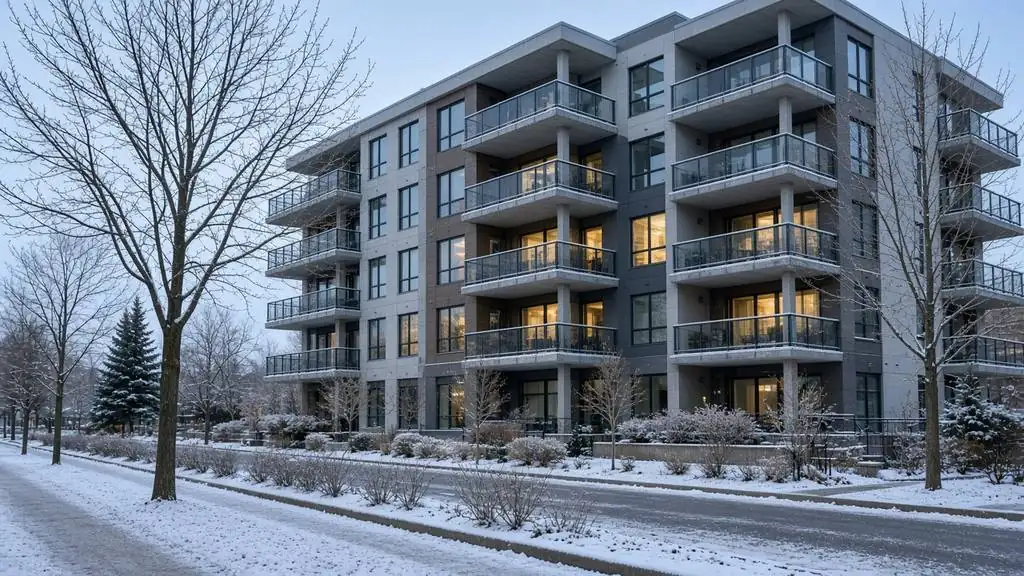
Condo insurance in Edmonton works in two layers. The condo corporation insures the building, the common property and each unit to its standard insurable unit description, for replacement cost. Your own condo owner's policy picks up what that leaves out: your belongings, your upgrades, your personal liability and, often, your share of the corporation's deductible, which under Alberta rules can be charged back to you up to $50,000 when damage starts in your unit.
Two policies, one home
Condo insurance in Edmonton is one of the most misunderstood parts of buying a condo. Many first-time buyers assume the condo fees take care of insurance. They do, partly. Your fees help pay for the corporation's policy on the building, but that policy was never meant to cover everything inside your door.
Think of it as two layers. The condo corporation insures the structure, the common property and your unit to a set standard. You insure your belongings, your upgrades, your liability and the gaps in between. Where one layer stops and the other begins is set by the Condominium Property Act, its regulation, your bylaws and the corporation's actual policy.
This guide is general information for Edmonton buyers and owners. It isn't insurance or legal advice, and a licensed insurance professional can tell you what coverage fits your situation.
What the condo corporation insures
Under section 47 of Alberta's Condominium Property Act, a corporation whose building is divided into units must insure the units, other than improvements made by owners, and the common property. Coverage has to be for replacement cost.
The Condominium Property Regulation lists the perils the corporation's policy must cover. They include:
- fire, smoke and lightning
- windstorm and hail
- explosion of natural gas
- water damage caused by flood, unless flood coverage isn't available for that property
- water damage from sewer back-up, or from the sudden and accidental escape of water or steam from plumbing, heating, sprinkler or air conditioning systems or a domestic appliance
- vandalism (with some exceptions) and impact by vehicles
The corporation also carries liability insurance for the board and the corporation, and a fidelity bond in case a board member or manager causes a loss through dishonesty. That liability coverage protects the corporation, not you personally.
Bare land condos are different. There, the corporation generally insures only the common property, so owners usually insure their own homes. If you're weighing a townhouse-style complex, our guide to bare land vs conventional condos explains how to tell which kind you're buying.
The standard insurable unit description
For each residential unit, the corporation insures to a standard insurable unit description, often shortened to SIUD. It describes the standard fixtures and finishes in the unit, such as flooring, cabinets, counters and fixtures, so everyone knows what the building policy will rebuild after a loss.
Anything above that standard is treated as an improvement, and improvements are generally yours to insure. That matters in Edmonton's resale market, where many units have been updated over the years. If a past owner swapped laminate for hardwood or added quartz counters, the building policy may only replace the original standard. The corporation must give owners notice of the SIUD, and the Government of Alberta's CondoLawAlberta insurance page explains how it fits with improvements and deductibles.
What your own condo policy usually covers
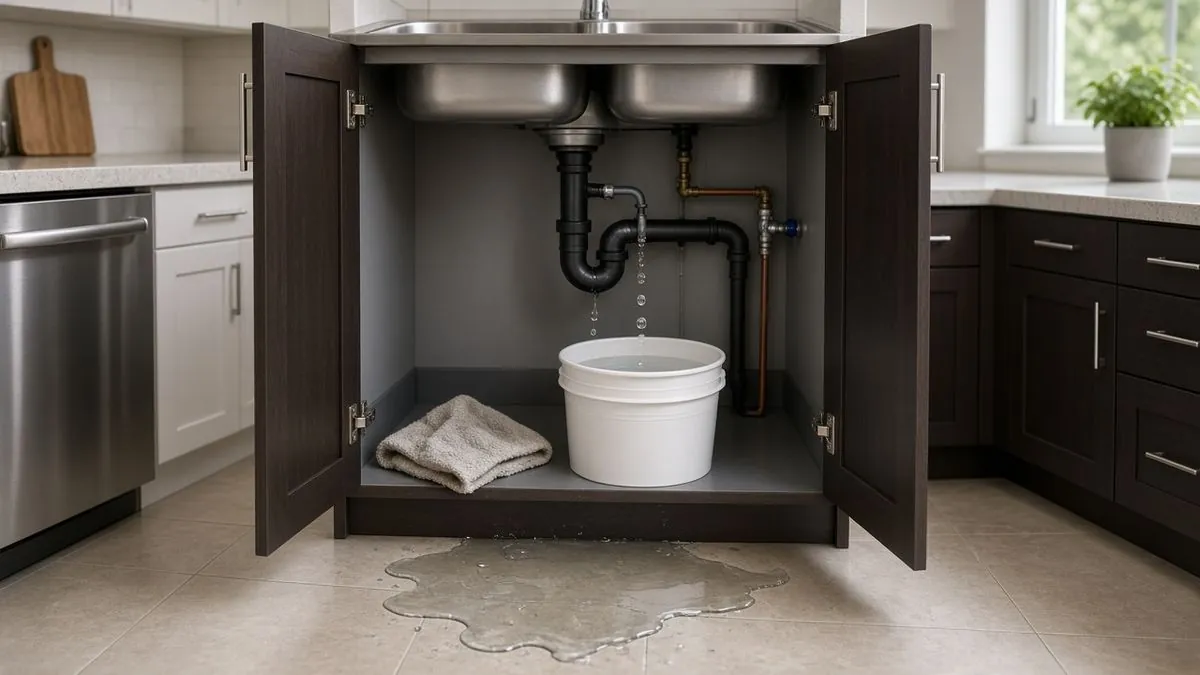
A condo owner's policy is built around what the corporation's policy leaves out. Service Alberta's consumer tips for condo owners point to these areas:
- Personal property. Furniture, clothing, electronics and everything else you own.
- Improvements. Upgrades beyond the standard insurable unit description, whether you made them or a previous owner did.
- Personal liability. If someone is hurt in your unit, or water from your unit damages a neighbour's.
- The corporation's deductible. Coverage that helps if the corporation charges its deductible back to you.
- Special assessments. Some policies offer coverage for certain insurance-related assessments.
- Additional living expenses. Help with costs if you have to live elsewhere while your unit is repaired.
Policies and limits vary between insurers. The Insurance Bureau of Canada has a plain-language overview of condo coverage, and a licensed broker or agent can match your limits to your building's documents.
The $50,000 deductible rule
This is the part Edmonton owners most need to understand. Under section 62.4 of the regulation, as amended in 2026, if damage starts in or from your unit, or an exclusive-use area assigned to you, the corporation can recover up to the amount of its insurance deductible from you. It doesn't have to file a claim first, and it doesn't have to prove you were negligent. You're "absolutely liable" on demand.
There's a ceiling. Despite any bylaw to the contrary, the corporation can't charge you more than $50,000. CondoLawAlberta gives the example of a $75,000 deductible, where the owner would be liable for only $50,000.
There are also exceptions. You aren't liable under this rule for damage caused by a construction defect in your unit or exclusive-use area, by an act or omission of the corporation or its board, officers, employees or agents, or by normal structural deterioration of common property you weren't responsible to maintain.
Deductibles vary from building to building and can differ by peril, so read each one on the insurance certificate. That's why deductible coverage on your own policy deserves a close look, and why your coverage should be matched to your building's actual numbers, not a guess. A large uninsured loss can also lead to a special assessment. Our special assessments guide covers how those work in Alberta.
Winter water damage in Edmonton
A leak that starts in your unit is the classic example of a deductible charge-back, and an Edmonton winter adds risk. EPCOR's frozen pipe guidance recommends keeping the heat at normal levels, insulating water lines near outside walls and doors, and leaving the heat on, rather than off, when you travel in winter.
A few habits that help condo owners:
- Know where your unit's water shut-off valve is before you need it.
- Check supply lines on the dishwasher, washer, toilet and fridge for wear.
- Keep the thermostat on when you head south for a winter break, and ask someone to check on the unit.
- Report leaks to management quickly, even small ones.
What to ask before you buy

Under section 44 of the Act, a purchaser or their lawyer can make a written request for the corporation's prescribed documents, and the corporation must provide them within 10 days. For insurance, ask for:
- The current insurance certificate, showing coverage amounts and the deductibles for each peril.
- The standard insurable unit description for the unit.
- Any notice of insurance changes, such as a higher deductible or new exclusions.
- Board minutes that mention recent claims, water losses or premium increases.
- The bylaws, to see whether owners must carry deductible coverage.
Read the insurance pages alongside the budget and the reserve fund study. Rising premiums show up in Edmonton condo fees, and our reserve fund study guide shows how to spot underfunding. Our condo document review checklist puts it all in order.
Thinking about a specific building? Contact the Elevate Realty Group condo team and we'll help you gather the documents and questions to bring to your lawyer and insurance professional.
General information only, not legal, tax, insurance or financial advice. Talk to a licensed professional about your situation, and have your condo documents reviewed before you waive conditions. Elevate Realty Group · Brokerage: Real Broker.
Quick Answers
Do I need condo insurance in Edmonton if the building is already insured?
What does the condo corporation's insurance cover?
What is a standard insurable unit description?
How much of the condo deductible can I be charged in Alberta?
Does condo insurance cover frozen or burst pipes?
Can I see the corporation's insurance before I buy an Edmonton condo?
Sources: Condominium Property Act, RSA 2000, c C-22 (Alberta King's Printer, current as of May 14, 2026), ss. 44, 47 · Condominium Property Regulation, AR 168/2000 (Alberta King's Printer, current as of Feb 15, 2026), ss. 61, 62.1, 62.4 · Alberta Regulation 23/2026 (O.C. 32/2026), amending s. 62.4 Recovery of amount of deductible · CondoLawAlberta (Government of Alberta): Insurance · Service Alberta: Consumer Tips, Owning a Condominium (April 2026) · EPCOR Edmonton: Prevent frozen water pipes · Insurance Bureau of Canada: Condo insurance
Images are illustrative.

Elevate Realty Group
We're an Edmonton-based real estate team with Real Broker, specializing in condo buyers across Downtown, Wîhkwêntôwin (Oliver), Glenora, Old Strathcona and beyond. We know what to look for in condo documents, reserve funds and bylaws, and we give you straight answers — no pressure.
- Local market knowledge — neighbourhoods, building types and recent sales across Edmonton
- Condo document review — once your offer is accepted, we flag red flags before you waive conditions
- Buyer, seller and investor experience — first condos, downsizes and rental portfolios
Live Condo MLS® Listings
Search every condo on the Edmonton MLS®, updated daily — then let a local condo specialist help you separate the great buildings from the money pits.